Thursday, January 16, 2025

Mula sa Silicon Valley hanggang Kesong Puti: Pagninilay sa Aking Kakaibang Paglalakbay

Isipin niyo  ipagpalit ang trabaho bilang software developer sa Amerika upang mangalakal ng kesong puti dito sa Pilipinas. Iyan mismo ang ginawa ko sa aking mahigit na 40 taong paglalakbay mula sa Silicon Valley, California hanggang pagbalik ko sa munting bayan ng Magdalena, Laguna kung saan isinusulong ko ang sustainable agriculture at kaunlaran ng komunidad.

Sa aking karera dumaan ako sa maraming pagbabago na madalas kinailangan ng tapang ng loob. Noong 20 anyos pa lang ako, iniwan ko ang tinubuang lupa at nagsimula sa mundo ng Information Technology upang gumawa ng financial software sa Estados Unidos, kung saan ako noon ay isang bagong saltang imigrante. Nakalipas ang isang dekada, naudyok ang aking kalooban na isagawa ang maging man for others, ang pangaral ng mga paring Heswita sa akin (na isinapuso ko) noong bata pa ako. Ito ang aking pakay sa pagpapalit ng karera at maglingkod sa publiko bilang Public Relations & Community Education coordinator para sa Asian Law Caucus sa San Francisco, California.

Sa trabahong iyon, masigasig kong isinulong at ipinaglaban ang civil rights (karapatang pantao). Hinikayat ko ang mga mamamahayag na bigyang pansin ng publiko ang mga patakarang kontra-imigrante, ang hindi makatarungang pagpapalayas ng mga maralitang senior citizen sa kanilang inuupahang tirahan sa Chinatown, ang masamang kondisyon ng mga custodial workers sa Silicon Valley, ang mapagsamantalang sahod ng mga mga mananahi sa sweatshops, at ang diskriminasyon sa pagpapaalis ng mga Pilipinong security guard dahil sa pagsasalita ng Tagalog sa kanilang trabaho. Sa panahong ding ito, sinimulan ko ring mahasa ang aking pagsusulat bilang isang freelance journalist, at nag-aambag sa mga publikasyon tulad ng Filipinas Magazine at Philippine News sa Estados Unidos.

Nang maglaon, sa ilalim ng proyekto ng U.S. Department of Health & Human Services, nagtrabaho ako bilang Program Director ng Asian Pacific Islander Health Information Network upang mapabuti ang pag-access sa healthcare ng mga Asian Pacific Islanders ; pinamunuan ko ang pagbibigay ng Information Technology sa mga grupong pangkalusugan upang maibahagi ang mga balita at impormasyon gamit ang Internet para sa mga komunidad ng mga  Asian Pacific Islanders sa buong bansa.

Sa huli, tila natagpuan ko ang aking tunay na bokasyon bilang isang social entrepreneur. Sa pagbalik ko sa aking pinagmulan noong 1997, bilang Managing Director ng Actuarial Services Company ng aking ama, pinamunuan ko ang pag-set up ng Public Safety Mutual Benefit Fund Incorporated, isang mutual benefit association na nagbibigay ng life insurance benefits sa mga unipormadong tauhan ng Philippine National Police, matapos tanggalin ang kanilang life insurance coverage sa GSIS.

Pagkatapos ng saglit na panahon sa Estados Unidos, bumalik ako sa Pilipinas noong 2011 upang alagaan ang aking tumatandang ina at simulan ang Remit4Change, isang proyekto ng US-based NGO,  na tumuon sa paggamit ng mga remittance para sa panlipunang kaunlaran. Sa panahon ding ito nakipagsapalaran ako sa agrikultura, at nagtatanim at nagbebenta ng organic sweet corn

Dahil sa mga mabigat hamon ng organic farming , ako’y nagiba ng tuon sa pagbebenta ng gatas ng kalabaw pagkatapos humingi ng tulong ang Municipal Agriculture Officer ng Magdalena sa pagbenta ng gatas ng kalabaw ng mga manggagatas ng bayan. Sa pagtatanto sa potensyal ng gatas ng kalabaw, nakipagtulungan ako sa mga carabao dairy farmers ng Magdalena at Rosario, Batangas para tugunan ang sobrang produksyon ng gatas. Ito ay humantong sa paglikha ng isang microenterprise na kilala sa pagbibigay ng mataas na kalidad na raw carabao milk at ang paggawa at pagbenta  ng mga artisanal cheese, kabilang ang mga sikat na kesong puti at isang lokal halloumi-style na tinatawag Magdalloumi na binansagan ng DTI-Laguna na isang tunay na inobasyon. (panoorin niyo po ito https://youtu.be/cILpXwUIz7E?si=U6UjRCcqZENlcJOp)

Nakita ko ang pagkakataon hindi lamang sa mag-supply ng gatas ng kalabaw para sa world-class na mozzarella at burrata sa isang sikat na brick oven pizza restaurant sa Metro Manila, ngunit para iangat ang kapangyarihan ang mga lokal na magsasaka at mag-ambag sa ekonomiya ng aking bayan. Ang aking mga pagsisikap ay hindi lamang nakatulong sa pagpapalakas ng lokal na ekonomiya ng bayan ng Magdalena at Rosario ngunit isulong din ang sustainable dairy agriculture. Kabalikat ang mga lokal na magsasaka ng gatas, pinangunahan ko ang pag-oorganisa ng Magdalena Agriculture Cooperative noong 2017, at nagsisilbing Chairman ng Board of Directors noong 2022.

Bilang karagdagan, pinangunahan ko ang mga pilantropong kagawian ng aming angkan Laico-Pronove para sa ikauunlad ng komunidad, pinadali ang mga gawad ng lupa sa Magdalena LGU para sa isang bypass na kalsada upang mapabuti ang access ng sasakyan sa apat na  barangay; isang kapirasong lupa para sa isang aquifer pumping station na nagbibigay ng maiinom na tubig sa libu-libong kabahayan sa Barangay Buenavista, Cigaras, at Salasad; isang maliit na parsela sa tabi ng highway kung saan itinayo pagawaan ng gatas at sales outlet; at isa pang parsela kung saan magtatayo ng early childhood care and education center

Ngayon sa aking semi-retirement, patuloy kong isulong ang sustainable agriculture at kaunlarang komunidad. Ang kakaibang lakbay ay pagpapatunay na hindi pa huli ang lahat para muling baguhin ang iyong sarili at makatulong sa pagpapaunlad ng komunidad. Sa pagbabalik-tanaw, ang aking malawak at malalim na mga karanasan at ang aking tumitinag na adhikain para sa pagpapaunlad ng  lipunan at ekonomiya ay ang paraan upang maging tunay na man for others.

Sa pamamagitan ng iba't ibang plataporma, kabilang ang aking Facebook page, nagbabahagi ako ng mga pananaw -- matalino man o hindi -- sa mga gawaing gatas kalabaw at inisyatibong pang-komunidad.

###

Wednesday, January 8, 2025

From Silicon Valley to Kesong Puti : A Reflection on my Unconventional Journey

Imagine trading lines of software code for creamy carabao cheese. That's exactly what I’ve done, embarking on a remarkable journey of over 40 years that has led me from the heart of Silicon Valley to a small town in the Philippines, where I now champion sustainable agriculture and community development.

My career has been marked by a series of bold transitions. At 20, I began in the IT industry, developing financial software in the United States where I had just arrived as a young immigrant. A decade later, driven by a desire to put into action the Jesuit mantra of becoming a man for others (which I took to heart), I transitioned into public service, becoming a Public Relations and Community Education Coordinator for the Asian Law Caucus in San Francisco.

There, I passionately advocated for civil rights, engaging journalists to bring public attention to anti-immigrant policies, unjust evictions of low-income elderly in Chinatown, poor working conditions for custodial workers in Silicon Valley, exploitative wages of garment workers in sweatshops, and discriminatory firing of Filipino security guards for speaking Pilipino in the workplace. I also started to hone my skills as a freelance journalist, contributing to publications like Filipinas Magazine and Philippine News.

Later, under a cooperative agreement with the U.S. Department of Health & Human Services, I worked to improve healthcare access for Asian Pacific Islanders as Program Director of the Asian Pacific Islander Health Information Network, where I took the lead in providing Internet technologies to public health groups to share policy news and information to Asian Pacific Islander communities across the country.

Ultimately, it seems, I found my calling as a social entrepreneur. Returning to my roots in 1997, I first managed my father's actuarial services firm, where I played a key role in setting up the Public Safety Mutual Benefit Fund Incorporated, a mutual benefit association that provides life insurance benefits to uniformed personnel of the Philippine National Police after they had been unceremoniously dropped from their own government's life insurance system.

After a period back in the US, I returned to the Philippines in 2011 to care for my aging mother and to initiate Remit4Change, a US-based NGO project focused on leveraging remittances for social impact. It was during this time that I ventured into agriculture, initially planting and selling organic sweet corn.

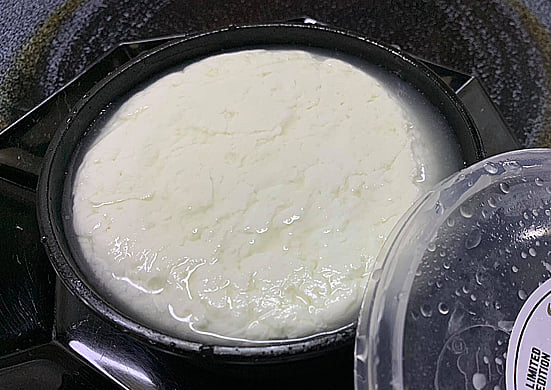
Facing serious challenges in raising organic crops, then in 2014, I shifted my focus to marketing carabao milk after the Municipal Agriculture Officer had asked for my help to market carabao dairy products of local farmers. Recognizing the potential of the undervalued food, I collaborated with carabao dairy farmers of Magdalena and Rosario, Batangas to address surplus milk production. This led to the creation of a microenterprise known for supplying high-quality, raw carabao milk and marketing artisanal cheeses, including the popular kesong puti and a local halloumi-style cheese called Magdalloumi (which the provincial Department of Trade & Industry director affirmatively viewed as an innovation, please watch https://youtu.be/cILpXwUIz7E?si=U6UjRCcqZENlcJOp).

I saw an opportunity not only to supply raw carabao milk for world-class mozzarella and burrata to a popular Filipino-owned brick oven pizza chain in Metro Manila but also to empower local farmers and contribute to my hometown's economy. My efforts have not only helped boost the local economies of Magdalena and Rosario but have also promoted sustainable dairy agriculture. Along with local dairy farmers, I took the lead in organizing the Magdalena Agriculture Cooperative in 2017, serving briefly as Chairman of its Board of Directors in 2022.

In addition, I took the lead in my family’s philanthropic efforts towards community development, facilitating land grants to the municipal government including a bypass road to improve vehicular access to four barangays; a plot of land for an aquifer pumping station that provides potable water to thousands of households in two barangays; a small plot by the highway on which to build a carabao dairy processing and sales outlet; and another plot on which to house an early childhood care and education center.

Now in semi-retirement, I continue to champion sustainable agriculture and community development, proving that it's never too late to reinvent yourself and have an impact. Looking back, my diverse experiences and unwavering commitment to social and economic progress may yet make me truly a man for others.

Through various platforms, including my Facebook page, I share insights -- wise and otherwise -- on carabao dairy endeavors and community initiatives; I also regularly opine on relevant local and national developments.

(You can find the Filipino translation: https://rcavosora.blogspot.com/2025/01/mula-sa-silicon-valley-hanggang-kesong.html)

###


Tuesday, October 29, 2024

NEUTRALIZE & NEGATE

Why Sen. Bato Dela Rosa is running around like a headless chicken?

The Wannsee Protocol was a summary document of the meeting held on January 20, 1942, in the Berlin suburb of Wannsee, where senior Nazi officials gathered to discuss and coordinate the implementation of the so-called "Final Solution"—the plan to systematically exterminate the Jewish population of Europe. This meeting is known as the Wannsee Conference. This was one of the primary documentary evidence used by the International Military Tribunal (IMT) that tried Nazi war criminals after World War II. It was used as evidence in subsequent war crimes trials.

Similarly, the PNP’s Command Memorandum Circular No.16-2016 (simply called CMC-16) may be used by the International Criminal Court as the primary documentary evidence to indict former Philippine President Rodrigo Duterte for crimes against humanity, particularly focusing on the "state-sponsored" nature of his administration's war on drugs. The document's contents were most likely discussed in a PNP Command Conference, and it was subsequently signed by Bato Dela Rosa when he was Chief of the PNP under Duterte.

The ICC's indictment would center on allegations that extrajudicial killings and other violent acts committed during the anti-drug campaign were systematic, widespread, and directed or supported by the state, classifying them as crimes against humanity. For the ICC to prove "state sponsorship," they would need to show that these actions were part of a governmental policy or had the backing of state apparatus, with top officials condoning or encouraging violent methods in drug enforcement. This could involve using Duterte’s own statements, records from Philippine law enforcement, or testimonies that indicate a coordinated, sanctioned policy aimed at eradicating drug offenders by any means necessary.
Without doubt, the former PNP Chief feels that the walls are closing in on him, and it didn't help that his former boss kept digging both their graves at the Senate "hearing".

###

Monday, April 15, 2024

Stunned by an Angel


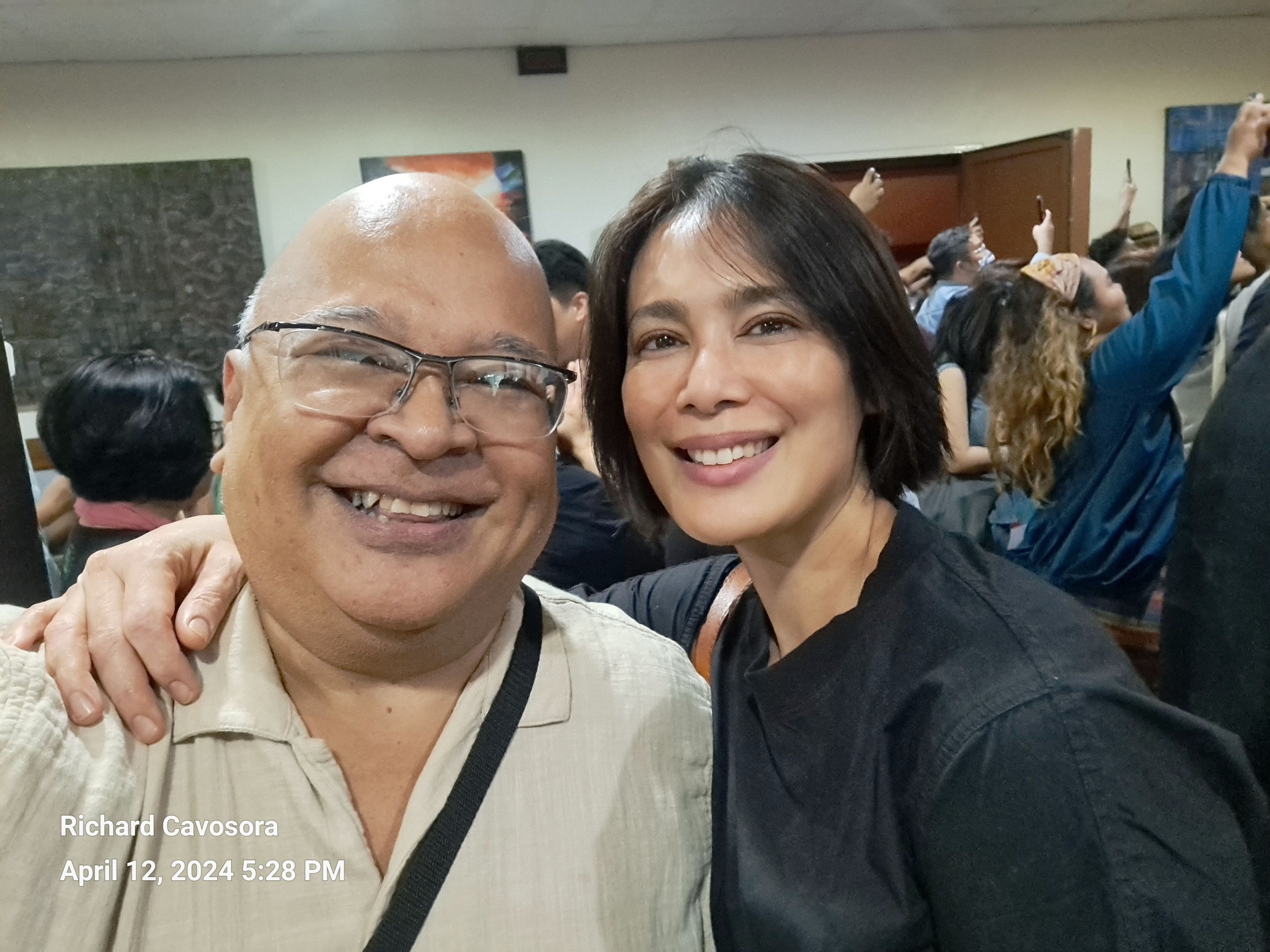
Once in a rare while, a captivating personality incites flashes of kilig and bighani in me. That happened when I shook the hand of an Angel after a staging of Pingkian, Isang Musikal, a play about Emilio Jacinto’s final months as a leader of a revolution.
An accomplished actor in film & television, Ms. Angelita Grace Velasquez Aquino is known for her stunning beauty. In a field full of mestiza celebrities with angular, aquiline features & whitish skin tone, Angel stands exceptional with her alluring blend of soft, classic kayumanggi features. If Botong Francisco had a chance to paint the mythical Maganda emerging from a split bamboo, Angel would have been the perfect model.
But beyond her drop dead looks, Angel reminded me of her association with Tulong Dunong (TD), the tutorial and scholarship program instituted by the late James O’Brian, SJ in the mid-1970s. This shared experience allowed me to muster enough guts to introduce myself to TD’s muse, a 51 year young woman of warmth, grace, and charm transformed from a shy teenage school girl, like the proverbial duckling turning into a radiant swan.
Raised in the working class neighborhood of Barangka, Marikina amidst shoe making workshops, Angel was the eldest of four siblings in a struggling family of limited means. TD selected her for a high school scholarship at St. Bridget School, a private Catholic school run by Good Shepherd sisters. She then majored in journalism at UP, and from there became a model and eventually an actor.
Angel was a TD tutee and scholar in the 80s, but when TD evolved into an autonomous, Ateneo-affiliated foundation, she became its ambassador, raising awareness about its mission and participating in fundraising events. For Angel & many more, TD was an opportunity to chart a journey beyond the limitations of their circumstance, to dream & to aspire. Her story serves as an inspiration to Tulong Dunong students. (You can hear the poignant story in her own voice in this video https://youtu.be/m07VAyggCSs?si=oOIczzUmQDqcxfSd ).

Saturday, January 20, 2024

Roots


204 years ago on January 18, 1820 my hometown of Magdalena was founded in the province of Laguna. It was a barrio separated from the town of Majayjay which Spanish conquistadors established in the foothills of Mount Banahaw within weeks after their 1571 invasion of Manila. Magdalena was founded by Juan Pascual Bernardo, among others, seven generations earlier. According to church records, one of my ancestors, Don Juan (as he was most likely addressed) donated the land on which the town plaza was built. Back then, for a village to be officially recognized by the colonial government as politically autonomous, it needed a plaza with an ayuntamiento (town hall), a church, and a school. Don Juan became the town's second "kapitan municipal" a year after it was founded.
Among twelve of Don Juan's grandchildren, the eldest, Maria Lucena, married a queue-wearing emigre from Fujian, China named Ong Layco. Like many immigrants from Fujian then, Ong Layco probably fled Amoy (now Xiamen) with some silver earnings from the opium trade. When the Qing Dynasty cracked down on the opium trade in 1839, it triggered the First Opium War (1839-1942) disrupting the lives of many, including the expansive Ong clan in Fujian province.
Ong Layco journeyed to the riverside town of Pagsangan, where Ong clan relatives had probably already settled. He was soon baptized as "Luis Onglayco," and moved to neighboring Magdalena perhaps after finding a clever way to acquire land for the burgeoning coconut trade. During those times, it was difficult for "Sangleys" to purchase land because of racial discrimination by Spanish colonists.
According to his great granddaughters (my aunts), Luis lent money to native "sabungeros" (cockfighting aficionados) who mortgaged their parcels of land to settle gambling debts. Many gamblers, apparently did not settle their mortgages and so ownership of their lands transferred to Don Luis. This can be attested to the fact that Luis' sons, Francisco (my great grandfather) & Ananias, eventually inherited patches of coconut land spread widely all over Magdalena, most of which were no larger than a few hectares.
With wealth from selling coconut & other produce, Francisco & Ananias became prominent, land-owning members of Magdalena. They dropped the Ong from their surname, rebranding themselves as Francisco & Ananias Laico, ostensibly to avoid racial discrimination and to facilitate their entry into local & national politics.
Both former local Katipunero leaders, they attended the Malolos Congress. Ananias later became a representative to the US Commonwealth Congress of the Philippine Islands, and Francisco served as town mayor several times.
Reflecting on my ancestral roots this Magdalena Day, as I notice Punjabi money lenders ply their trade, I recall a quote from Jose Rizal, "ang hindi marunong lumingon sa pinanggalingan, hindi makararating sa paroroonan." Those who do not look from whence they came, will not reach where they are headed.
I cannot help imagine Filpinos of South Asian ancestry owning property in Magdalena several generations hence.

###

Sunday, September 10, 2023

BRP Ladislao Diwa


The Philippine Navy commissioned 2 patrol craft donated by the United States. The ships were renamed after 2 of 5 co-founders of the Katipunan, Valentin Diaz & Ladislao Diwa who served as 1 of 3 in the top triumverate leadership of the Katipunan.
The fairly grand event staged by the Philippine Navy was attended by descendants of Diaz & Diwa.
Five of Diwa's descendants served in the military. Two grandsons served in the Philippine Air Force. Retired Gen. Chester Ebuen (PMA '70) once piloted presidential planes under Ferdinand Marcos Sr., Corazon Aquino, & Fidel V. Ramos. His younger brother, Col. Ladislao Diwa Ebuen (PMA 71) also served in the PAF. The Ebuen brothers are sons of the late Gen. Benito Ebuen who perished in a plane crash with President Ramon Magsaysay.
Another grandson of Diwa was Horatio Diwa who served in the US Navy whose two sons also served in the US military. My cousin, Manuel (a retired Colonel in the Special Forces of the US Army), attended the ceremony where PH Defense Secretary Gilbert Teodoro & US Ambassador MaryKay Clarkson gave opportune speeches in these troubling times.
I couldn't help but reflect that the bond between the Philippines and the United States transcends historical & political ties; it is organic in the blood ties between & amongst Filipinos & Filipino Americans.
We can only hope that the 2 ships, named after Filipino revolutionaries for nationhood, will never be used to settle a territorial dispute.

###

Thursday, May 13, 2021

The Accidental Cheesemonger


lechero circa 1800s

I never expected to become a lechero (a milkman), or a quesero (a cheesemaker), and much less a fromager (a cheesemonger).

Yet I have become all three as I cross into my sixties.

In 2014, after a failed venture growing organic sweet corn, losing more than a million pesos in the gambit, our town's patron Santa Maria Magdalena, so it seemed, lit me a path of recovery with a challenge.  

As a lapsed, when-I-feel-like-it Catholic, I am not a particularly religious person prone to spiritualizing good fortune, nor am I one to petition God for a venture's favorable outcome. In retrospect, however, Heaven (again, so it seemed) handed me a divine mission. Despite a somewhat false reputation as a capable salesman, I was "blessed" with a near impossible mission to help a desperate band of dairy farmers profitably dispose of their 700 liters of gatas ng kalabaw within a week!

Our town's agriculture officer, Cecille Sy, approached me, seeking help in selling the looming milk harvest of carabao dairy farmers from Magdalena, Laguna. They were anticipating a dramatic rise in milk production with the expected birth of new calves from about a dozen of gestating carabaos. 

On average, a dairy carabao produces between 3 and 6 liters of milk a day, 30 to 40 liters per week,  for about 300 days in a full year. A dozen lactating carabaos could thus bring an additional 21 to 42 liters a day. 

A dairy carabao of the Murrah variety

In addition to the daily collective yield of some 30 liters per day, or 210 liters per week, the additional yield could reach 500 liters per week. As it was, the farmers were already struggling to sell less than 100 liters weekly, what more 500 liters or so per week?

It was not a simple problem to solve just by selling milk to individuals through retail. How many households would you sell to, if you could, in a week? Moreover, carabao milk was three times more expensive than the more affordable and accessible cow's milk. 

Besides, my sales experience then was limited to three days selling sweet corn at a food fair, and to top it all, I had absolutely no experience selling dairy products.

It was a mission, however, that I had to accept. If the milk was not sold within a week of harvesting, even if frozen, most would curdle, if not spoil. The milk would be rendered unsellable in liquid form, and farmers would lose much-needed income.  

Statue at the Parish Church

Providentially, Santa Maria Magdalena did intercede. On my very first milk-selling foray, I found a buyer. Not a drop of milk was wasted. In the coming week, 700 liters of gatas would bring joy to scores of pizza and Burrata lovers. The milk would be transformed into over a hundred  kilos of creamy, silky mozzarella de kalabaw made by the Gino's Brick Oven Pizza chain. 

The wise counsel of an old friend and mentor, Luz de Leon, and the timely assistance of Ms. Amy Besa (of Purple Yam fame), helped me complete my mission. 

I was introduced to Jutes Templo, the pizza restaurateur, who desperately needed carabao milk on the very same weekend the farmers’ milk harvest had to be disposed of. In common desperation, one group's problem became another person’s solution.

That is how my journey toward becoming a cheesemonger started, helping carabao dairy farmers sell their milk and finding a pizza restaurateur who needed them to make cheese. To this day, it has been my continuing mission to help both farmers and consumers. Little did I know that my efforts would have a social and economic impact on our fifth-class municipality with a poverty incidence of 16.5% .

But in the past seven years, the prospect of wasted milk and income loss would be a constant threat. So, to mitigate the threat, I ventured into becoming a quesero and a fromager  to extend the nutritional and economic value of carabao milk in the form of cheese.

MAGCO members


Michael Rodriguez, a high school batchmate, gentleman farmer, and gourmand had travelled to Turkey where he discovered halloumi. He introduced me to it and suggested that I make the halloumi with carabao milk instead of its traditional base of sheep or goat milk.


After a couple years of research and development, I reinvented halloumi into "Magdalloumi" in honor of Santa Maria Magdalena and my ancestral hometown,

Magdalloumi in brine

At the start of July, as the Feast of St. Mary Magdalene approaches on July 22, the Magdalena Agriculture Cooperative (MAGCO) and I started earnestly collaborating to make and sell Magdalloumi. In small batches, MAGCO artisanally crafts the semi-hard, squeaky, salty and creamy cheese which is best served fried or grilled; then I bring it to market. It has been very well-received by a group of supporters and patrons on Facebook.


Seared Magdalloumi w/ Honey-Kalamansi sauce
If I have learned anything in my continuing mission, it is this: a dairy enterprise requires a bayanihan effort. If "it takes a village to raise a child," it takes a community to grow and sustain an enterprise. Bringing milk from the dairy farm, transforming it into dairy products, and then putting them on a family's table is  bayanihan at work.  Currently, we only produce no more than twenty kilos worth of Magdalloumi per week, roughly 90 tubs of 250 grams each. but our Magdalloumi and kesong puti "ecosystem" involves healthy dairy carabaos, smallholder dairy farmers , government managers and technicians, milk processors,  artisans, drivers, and cheesemongers, and cheese-loving patrons.

So, as I work to sustain this community and find more customers for Magdalloumi, all I ask is that current and future patrons indulge me in my missionary zeal, in my kakulitan, to bring this savory food to the table.

###